born on February 3, 1901 in Bourne End, England
died on March 12, 1990 in London, England
British writer
125th birthday on February 3, 2026
Biography
Rosamond Lehmann was 26 years old when she published her first novel, Dusty Answer. She made history in the English-speaking world – more specifically, lesbian literary history – by addressing the theme of passionate (platonic) love between women, albeit so “discreetly” that “you don't even notice it when you read the book once” (LeStourgeon). She did so in 1927, a year before Radclyffe Hall caused a scandal with Well of Loneliness and Virginia Woolf published Orlando.
Yet at the time many readers certainly did take immediate notice. Women and men fell in love with the heroine Judy and sent the young author passionate declarations of love, correctly assuming that the novel was largely autobiographical. In her essay “The Future of the Novel” (1946), Lehmann noted that “the modern novel does not give us characters to fall in love with. As long as the novel fails to fully engage with itself and its characters, as it did in the past, it will remain small and cold, however sharp and bright it may be…”
Rosamond Lehmann grew up in an educated and wealthy family in Buckinghamshire. She and her siblings Beatrix (actress) and John (writer) became well-known figures in the literary and art scene, closely associated with the Bloomsbury Group that revolved around the Woolfs, Bells, and Stracheys.
After studying modern languages at Cambridge, Rosamond Lehmann married in 1923. She had two children with her second husband: Hugo and Sally. This marriage ended in divorce in 1942. For nine years, she was involved with the married writer Cecil Day-Lewis (father of actor Daniel Day-Lewis). Lehmann's main creative period was the 1930s.
In addition to the play No More Music (1939), she wrote the following novels during this period: A Note in Music (1930), Invitation to the Waltz (1932), and The Weather in the Streets (1936). This was followed by The Ballad and the Source in 1944 and The Echoing Grove in 1953. Twenty-three years passed before Lehmann's last novel, A Sea–Grape Tree (1976), was published.
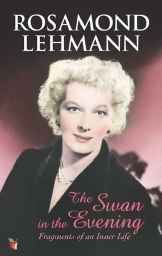
In 1958, her beloved daughter Sally died of polio at the age of 24. In her grief, Lehmann turned to spiritualism and attempted to contact her deceased daughter (another parallel to Radclyffe Hall, who 40 years earlier had also devoted years to researching the afterlife). She became the secretary, confidante, and friend of the “great seer” (Lehmann) Wellesley Tudor Pole. Lehmann processed this period of her life in three spiritualist-oriented works: A Man Seen Afar (1965), written with W.T. Pole, a treatise on the life of Jesus as revealed to Pole in mystical rapture; A Swan in the Evening: Fragments of an Inner Life (1967), which met with awkward and embarrassed reactions from critics; Letters from Our Daughters (co-authored by Cynthia Hill Sandys).
In the wake of the new women's movement, Lehmann's novels, mostly highly sensitive and precise explorations of the world of young girls and women in lyrical prose, were reissued by Virago. Most of her books are also available in German as paperbacks.
(Translated with DeepL.com; edited by Ramona Fararo, 2026.
Please consult the German version for additional information, pictures, sources, videos, and bibliography.)
Quotes
If she is not a Bach of the novel, she is at least a Chopin. (Diana LeStourgeon)
“You mustn't love anyone,” said Jennifer. “I should want to kill him. I should be jealous.“ Her brooding eyes fell heavily on Judith's lifted face. ”I love you.“ And at those words, that look, Roddy faded again harmlessly. Jennifer blinded and enfolded her senses once more, and only Jennifer had power. (Rosamond Lehmann, Dusty Answer, 1927)
If you hold the rights to one or more of the images on this page and object to its/their appearance here, please contact Fembio.