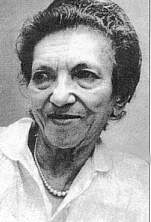
(née Beatrice Scherzer; Rosalie Beatrice Ruth Scherze)
born on May 11, 1901, in Czernowitz/Bukovina, Austria-Hungary
died on January 3, 1988, in Düsseldorf, West Germany
Austrian-Romanian-US American-German poet
125th birthday on May 11, 2026
Biography
Rose Ausländer, née Rosalie Beatrice Ruth Scherzer, was born in Bukovina. Her father Sigmund came from the strictly Orthodox town of Sadagora, which was influenced by Hasidism and Eastern Jewish mysticism, but he was a freethinker. He became an authorized officer in an import-export company in the capital Czernowitz, where he met his bride Etie Rifke Binder.
Rose grew up in a cosmopolitan, liberal Jewish home that was loyal to the emperor, but where the most important Jewish traditions were observed. In addition, this “former easternmost province of German-Austrian culture” (Kurt Rein) had a nearly 200-year-old tradition of German language and literature. Ruth studied literature and philosophy at the University of Czernowitz in 1919/1920 and emigrated to the United States in 1921 with her college friend Ignaz Ausländer. The couple married in 1923 and separated at the end of 1926. They divorced in 1930.
Rose Ausländer received American citizenship, but it was revoked in 1934 due to her three-year absence from the United States. She published her first poems in the United States and worked as an editor, secretary, and bank clerk, among other things. After returning to Czernowitz in 1931 to care for her ailing mother, she worked in her hometown as a poet, journalist, translator, and English teacher. Her first collection of poems, Der Regenbogen (The Rainbow), was published in Czernowitz in 1939.
From 1941 to 1944, during the Nazi occupation of the city, Rose Ausländer was able to survive in the ghetto. She was forced to perform hard labor and to hide in a basement for a time.
The poet moved to New York in 1946, where she published poems in German and English. Her first volume after the war, Blinder Sommer (Blind Summer), was published in Vienna in 1965. Rose Ausländer moved to West Germany in 1965, traveled extensively, and lived from 1970 to 1988 in the Nelly Sachs House, the retirement home of the Jewish community in Düsseldorf. She was bedridden for the last ten years of her life.
She published more than twenty volumes of poetry, including Hügel aus Äther unwiderruflich (Hills of Ether, Irrevocable), Im Aschenregen die Spur deines Namens (In the Ash Rain, the Trace of Your Name) and Mutterland/Einverständnis (Motherland/Consent); Jeder Tropfen ein Tag (Every Drop a Day) was compiled from her estate.
Towards the end of her life, Ausländer received numerous prizes and awards. The Rose-Ausländer-Gesellschaft in Düsseldorf and the Rose-Ausländer-Dokumentationszentrum in Üxheim/Eifel have supported further research. Some of her poems have been set for female voice(s) and piano by Willy Giefer, Brunhilde Sonntag, Elizabeth Alexander, and Marius Flothuis.
(Text from 1997; translated with DeepL.com; edited by Ramona Fararo, 2026.
Please consult the German version for additional information, pictures, sources, videos, and bibliography.)
Quotes
Rose's feel for language is rooted in [the] experience of border dwellers (...), who (...) develop a reflective relationship to words in the midst of the unfamiliar and who consciously assign themselves to a linguistic homeland. (Cilly Helfrich)
Motherland
My fatherland is dead they buried it in fire
I live in my motherland Word(Rose Ausländer)
If you hold the rights to one or more of the images on this page and object to its/their appearance here, please contact Fembio.