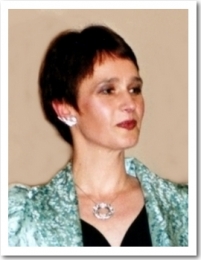
(Dr. phil. Annette Otterstedt)
born on September 23, 1951, in Erlangen
died on September 6, 2020, in Berlin
German feminist musicologist, musician, composer, and museum curator
75th birthday on September 23, 2026
Biography
Note from the FemBio editorial team: This FemBiography of the prominent musicologist Annette Otterstedt was written by her partner, Hans Reiners. It is therefore more personal in tone than other FemBiographies.
Born in Erlangen, Annette moved to Hamburg in 1958, where she attended school and earned her Abitur at the Wilhelmgymnasium.
In 1971, she moved to Berlin to study musicology under Carl Dahlhaus, ethnomusicology at the Freie Universität Berlin, and Jewish studies under Marianne Awerbuch.
In 1981, she earned her Magistra degree, followed in 1989 by a doctorate summa cum laude on the English lyra viol, a highly specialized, chordal, polyphonic string instrument of the viola da gamba family that experienced its heyday in English court circles from the early 17th century until the English Civil War and anticipated many developments in European instrumental music. She oversaw the reconstruction of this instrument on the basis of historical sources, ensuring the highest quality. Starting in 1980 she performed on it in concerts just as assiduously as she performed on the other members of the viola da gamba family. She had all of these instruments replicated based on surviving originals, expertly supervising the workmanship to ensure the highest quality.
Her contribution to the further development of viola da gamba making and to the significance of the lyra viol was honored both by her luthier, Neil Hansford of Bristol, and by the Viola da Gamba Society of Great Britain, which granted her honorary membership. This was followed by numerous invitations to give brief presentations or full-day lectures at various events. Her contributions were held in high regard at every conference and all the symposia she attended.
1991 Appointed curator at the Berlin Museum of Musical Instruments for instruments dating up to 1800, excluding keyboard instruments.
1994 Publication of the seminal work Die Gambe. Kulturgeschichte und praktischer Ratgeber (out of print; despite high demand, the publisher has no plans for a revised edition).
In 1997, she co-authored the monograph “Die Alemannische Schule. Geigenbau des 17. Jahrhunderts im südlichen Schwarzwald und in der Schweiz” (The Alemannic School: 17th-Century Violin Making in the Southern Black Forest and Switzerland) with Olga Adelmann. The book was an all-female project and had far-reaching consequences for the history of violin making and the violin trade worldwide.
In 2002, the expanded English version, The Viol: History of an Instrument, was published. The expansion includes, in particular, a detailed chapter on women who played the viol.
In 2003, the four-language edition of Diego Ortiz’s Trattado de Glosas (1553) was published. In addition, she wrote many articles on instrumentology and performance practice (typically penning all first drafts with a fountain pen) that were published across the world.
As a curator, Annette oversaw major research projects, including “The Alemannic School,” which featured a CD recording of the museum’s Alemannic instruments (still the best-selling one), the wind instruments of St. Wenceslas Church in Naumburg (unpublished), as well as a multitude of exhibitions on the history of instruments and instrument making, culminating in a series of related lecture-concerts titled “Das Forschende Orchestre,” for which she was able to attract the most renowned experts of historical performance practice on the respective instruments.
Annette’s rich history as a musician spanned over forty years of concerts as a soloist, consort leader, and, in particular, as an author, composer, and performer of duos for two lyra viols. In 2005 and 2006, CDs featuring 17th-century English music were released; Annette had arranged or composed these works herself—drawing on her comprehensive knowledge of the various composers’ approaches to writing for two lyra viols—and performed them publicly with her partner Hans for years.
Yet her own compositions have never been identified as new works by the most eminent experts on the music of that period. A leading figure in English chamber music commented on her work as follows: “I believe that in Japan they have an award that translates as ‘National Living Monument’ (or is it ‘Living Treasure’?). You and Hans should be recipients by now, for Europe…”
One of Annette’s most striking talents—along with her comprehensive humanistic education—was her keen eye for detail, her ability to detect things that didn’t fit together and to spot gaps. Consequently, it was always a particular pleasure for her when she could reasonably admit that she had been mistaken. In short, she was a woman of extraordinary strength.
A success story par excellence. Unfortunately, it must be accompanied by annotations—and by no means only those relating to the unfortunate realities that affect nearly all women in academic circles. “Backward and in high heels”? That was no problem for this accomplished dancer of the Argentine tango. But Annette’s youth, as well as her career as a musicologist, were marked by severe adversity.
The men on her father’s side of the family had been doctors for four generations, most of them with their own clinics. Her mother was a highly gifted organist from a wealthy North German family who, however, squandered her talents for what she perceived as reasons of prestige. When Annette was a year and a half old (and, according to her mother, a particularly sweet baby), she suffered a severe chemical burn accident due to the irresponsibility of a pediatrician friend who had left a bottle of fuming nitric acid open and unattended in his office—an accident that led to some 20 years of hospital stays and surgeries. Had it been up to her parents, Annette would have had little chance of survival. She was shunted aside as long as it didn’t become too scandalous among their circle of acquaintances, and the author of this biography is convinced that a discreet death was planned. Many of her relatives knew nothing of her existence.
Without any assistance from her mother, Annette had to sue her father several times herself for child support. Her father owned a private plane and a villa in Malta, yet in the 1970s he was able to convince the South German court—whose president he socialized with at a club they both belonged to—that paying more than 500 DM a month was beyond his means.
Annette was ordered to pay the court costs. Nevertheless, Annette graduated summa cum laude and even managed to save money for instruments from the meager 500 DM child support she received. She earned extra money with music lessons, radio shows (many on Sender Freies Berlin, to which she was abruptly no longer invited because the editor was outraged that she had placed a feminist pocket calendar on the table), concerts, and work as a guide at Charlottenburg Palace.
After earning her doctorate, Annette applied for the curator position at the museum in Berlin. She was hired over 53 other applicants even though she had applied too late. It afterwards became clear that—because of a critical article about the Neues Museum—she had only been selected in order to destroy all future job prospects by firing her after the mandatory probationary period. Although she was intimidated, she remained determined. The attempted smear campaign had initially turned many of her roughly fifty colleagues against Annette. Yet she soon became their most respected and popular colleague, remaining so until her departure.
The museum’s leadership changed, but the hoped-for improvement failed to materialize. According to outsiders’ impressions, the Prussian Cultural Heritage Foundation, to which the museum belongs, has a hierarchy even more impenetrable than that of the military. Annette was undoubtedly the most competent of the research staff, but she lacked political backing. What followed were 25 years of struggling within an institution that left no stone unturned in its efforts to hinder and obscure Annette’s work. She had to carry out most of her projects and exhibitions on a budget of 500 euros and without any publicity.
Unfortunately, the building where Annette served her sentence took a heavy psychological and physical toll on quite a few of the inmates. At Annette’s urging, the museum’s indoor air was officially tested, and a bacterial contamination level up to 100,000 times the normal level was detected—but this was not made public. For years, Annette suffered from a life-threatening multidrug-resistant infection caused by this. Her condition became even more critical shortly before her 65th birthday—despite a healthy lifestyle and the competent medical care she received.
On the evening of September 6, 2020, Annette Otterstedt passed away peacefully.
I bow my head in humility and love before my life partner, who was the light of my life for 39 years.
(Text from 2016; translated with DeepL.com; edited by Ramona Fararo, 2026.
Please consult the German version for additional information, pictures, sources, videos, and bibliography.)
If you hold the rights to one or more of the images on this page and object to its/their appearance here, please contact Fembio.